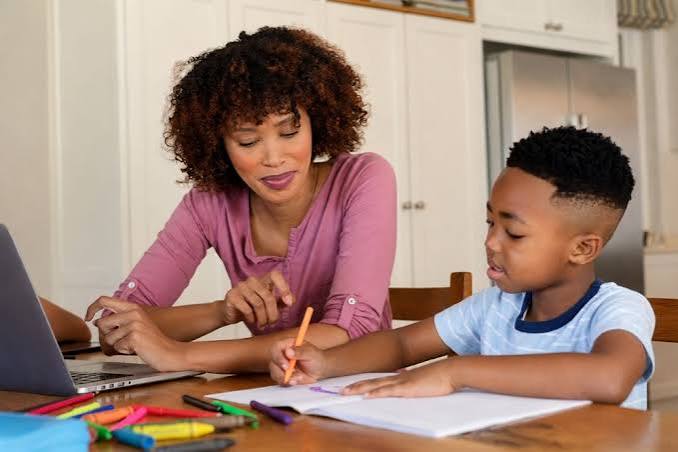
You do not need to be a teacher to help your child do better in school. Most of the difference comes from a few steady habits at home. Here are ten that work for children in primary and secondary school.
1. Fix a daily homework time
Pick a time and a place, and keep it the same each day. A child who knows "homework starts at 5 pm at the table" argues less than one who is asked at random. Even 45 minutes of focused work beats three hours of distracted work.
2. Keep the study place quiet and simple
Switch off the television. Keep phones away unless the task needs one. A table, a chair, a light and a school bag are enough.
3. Look at the school bag every evening
Check the exercise books and notes together. Ask: "What did you learn today?" and "What is due tomorrow?" It takes five minutes and catches problems early.
4. Read together every day
For younger children, read aloud for ten minutes. For older ones, ask them to tell you about what they are reading. Strong reading helps every subject, including Mathematics, because pupils must understand the question.
5. Practise the basics
Multiplication tables, spelling and simple sums need regular practice. Short daily practice is better than one long session before a test.
6. Make a simple revision timetable
Before tests and exams, write a one-week plan: one or two subjects each evening, and a day for rest. Put it on the wall. Children feel less stressed when they can see the plan.
7. Praise effort, not only results
Say "I saw how hard you worked on that" instead of only "well done for the score". Children who feel their effort is noticed keep trying when the work gets hard.
8. Protect sleep and breakfast
A tired, hungry child cannot learn. Aim for a regular bedtime and a proper breakfast on school days.
9. Talk to the teacher early
If your child's marks fall, do not wait for the next report card. Ask the teacher what is happening and how you can help. Read how to read your child's report card to know what to ask.
10. Limit screens and games
Set clear limits on phones, games and television during the school week. Agree the rules with your child so they feel fair.
When a child is struggling
If a child is far behind, extra lessons can help, but first ask the teacher what the exact gap is. One missed topic, such as fractions, may be the reason for months of low marks. Fixing that one thing is better than adding more hours of general lessons.
Frequently asked questions
How can I help my child at home if I did not go to school?
You can still help by keeping a routine, checking the bag, asking questions and praising effort. You do not need to know the answers to show interest and to make sure homework is done.
How much homework time is right for a child?
It depends on the age. Young children may need 20 to 30 minutes. Older pupils may need one to two hours. Quality matters more than length, so a quiet, regular time helps most.
Should I send my child for extra lessons?
Only if the teacher identifies a specific gap. Ask what the child finds difficult and choose lessons that target it, so you do not pay for hours that do not help.
How can I help my child before an exam?
Make a one-week revision plan, practise past questions, and make sure they sleep well. Avoid long all-night studying, which usually does not work.
How StudyPat helps
When a school uses StudyPat, parents can sign in to the parent portal to see their child's results, so they can spot a falling subject early and talk to the teacher. Schools that publish the CA report give parents a chance to help before the final exam. See how to get parents to use the school portal.